
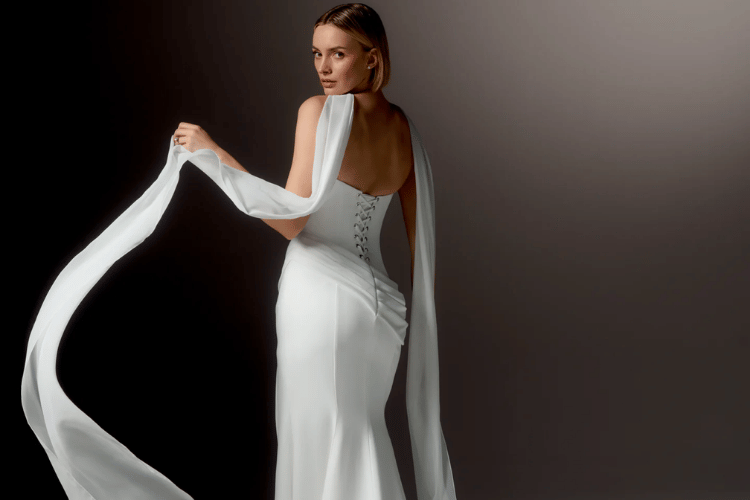
You may love the look of a wedding dress online, then see it in person and realize the fabric feels completely different from what you imagined. The fabric affects how the gown moves and feels on your body, so understanding those differences can help you make a more informed choice.
Wedding dress fabrics can vary widely in weight, texture, structure, and finish. Knowing what sets them apart can help you shop with a clearer idea of what you want.
Why Wedding Dress Fabric Matters
Fabric affects much more than the texture of your wedding dress. It influences the gown’s structure, movement, weight, sheen, and overall appearance, so two dresses with a similar silhouette can create very different looks.
Your venue and wedding season can also influence which fabrics feel right. A lightweight fabric may feel more comfortable for a warm outdoor celebration, while a structured material can create a more polished look for a formal ballroom wedding.
Your personal style matters just as much. If you love a sleek, modern gown, you may gravitate toward smooth fabrics with a refined finish. If you prefer romance and dimension, lace, tulle, or layered fabrics may give you the detail you want.
Ready to Start Shopping?
Book a bridal appointment at Zen Bridal and get personalized guidance from the start of your dress search.
Wedding Dress Fabrics Explained
Satin
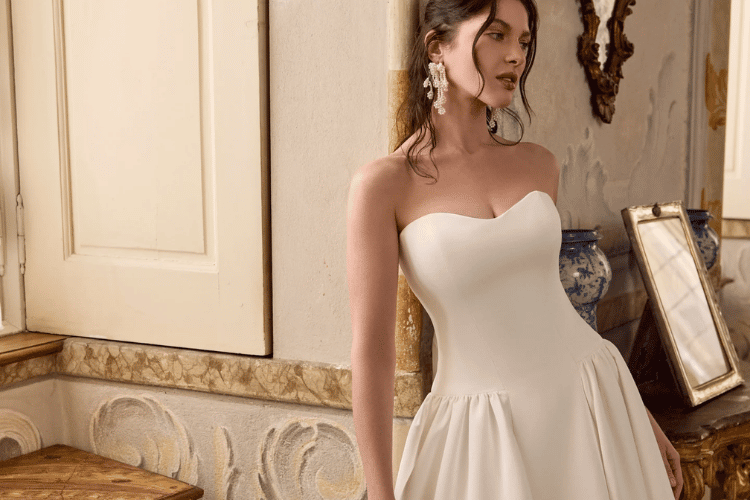
Satin creates a smooth surface with a noticeable sheen, giving wedding gowns a polished and luxurious appearance. It works especially well with structured silhouettes because the fabric can hold shape beautifully.
You will often see satin in ball gowns, A-line dresses, fit-and-flare silhouettes, and sleek contemporary designs. Heavier satin can create dramatic structure, while lighter versions offer a softer drape.
Crepe
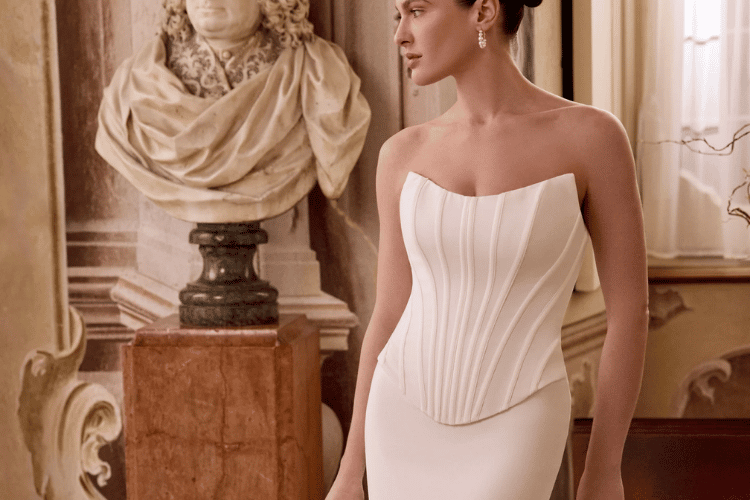
Crepe has a smooth, matte finish and a fluid drape that follows the body without looking overly shiny. It works particularly well for fitted gowns because it creates a clean, streamlined appearance.
If you want a modern dress with understated elegance, crepe can give you that polished look without adding visual weight. The fabric also pairs beautifully with details such as lace, beading, or illusion panels.
Chiffon
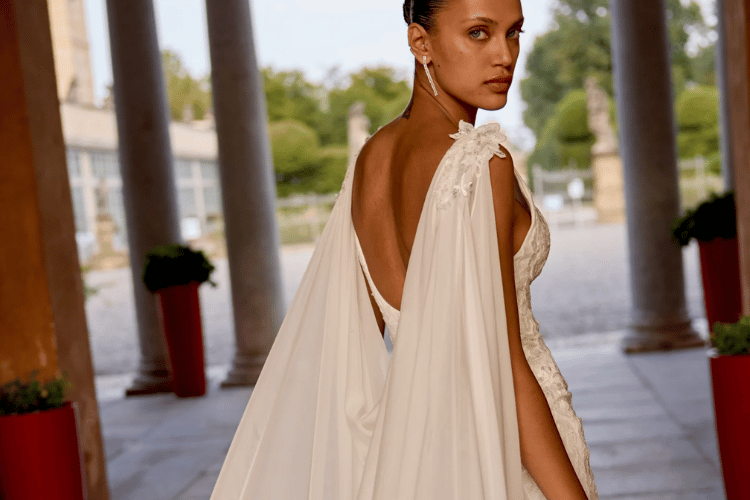
Chiffon feels light and airy, making it a natural choice for soft, flowing gowns. Its delicate drape creates movement as you walk, which can look especially beautiful during an outdoor ceremony or a romantic venue setting.
Because chiffon has a lightweight appearance, designers often use it for layered skirts, sleeves, overlays, and bridesmaid dresses. It can also soften a gown with a more structured base.
Tulle
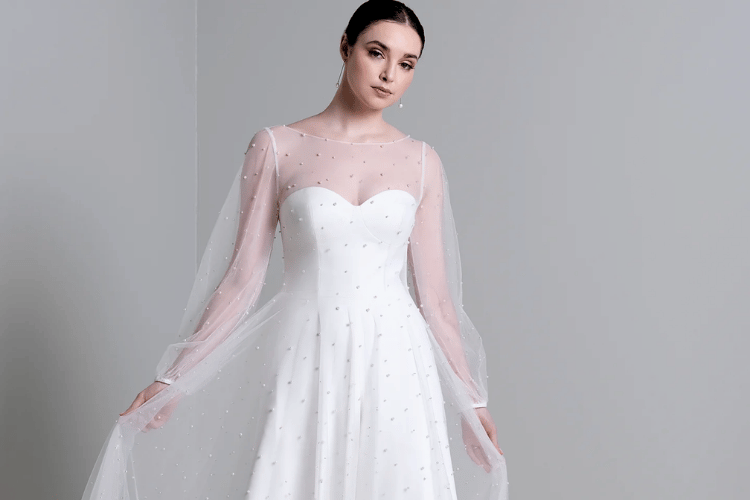
Tulle brings volume and texture without creating the same visual heaviness as many structured fabrics. Designers use it frequently for full skirts, veils, sleeves, overlays, and layered details.
Soft tulle can create an ethereal effect, while firmer varieties can add more dramatic volume. You may also find tulle embellished with lace, sequins, embroidery, or subtle sparkle.
Organza
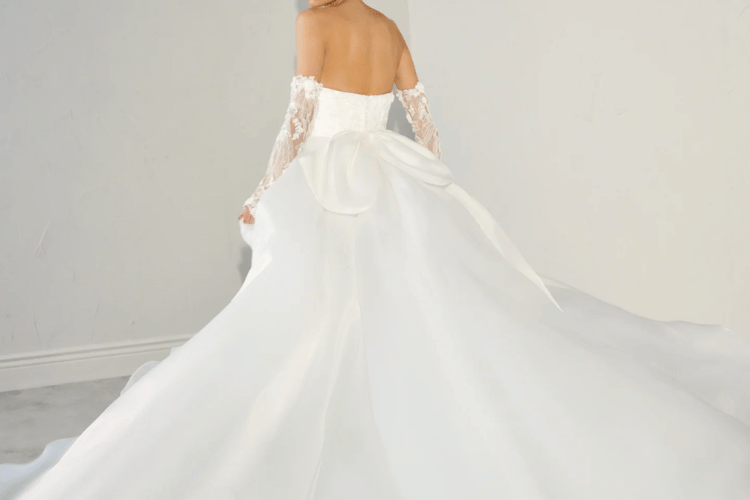
Organza has a crisp finish and lightweight structure, which allows it to create volume while maintaining an airy appearance. It can give a skirt a sculpted shape without making the gown look excessively heavy.
This fabric works beautifully when you want a fuller silhouette with a modern finish. Designers also use organza for sleeves, bows, overskirts, and other statement details.
Lace
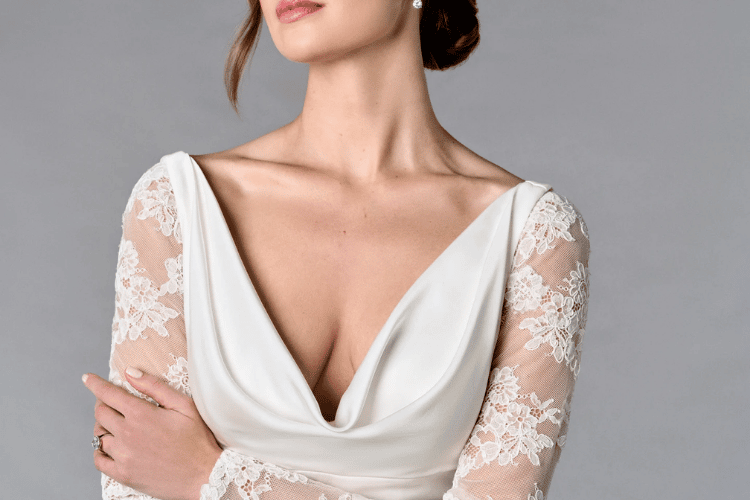
Lace adds pattern, texture, and dimension to a wedding gown. Rather than creating the structure of a dress on its own, designers typically layer lace over another fabric or use it strategically throughout the gown.
Different lace patterns can create very different impressions. Floral lace can feel romantic, while botanical or geometric motifs can give a gown a more contemporary edge.
How to Choose the Right Fabric for Your Dress
Start by thinking about the look you want before narrowing down specific fabrics. A sleek fitted gown may benefit from crepe, while a dramatic ball gown may call for satin, tulle, or organza to create the desired shape.
Then consider how you want the dress to move. Flowing fabrics create softness and movement, while structured materials maintain a more defined silhouette.
Your wedding setting deserves attention as well. A formal indoor celebration may suit a more structured fabric, while a garden, beach, or outdoor wedding may inspire a lighter and more fluid choice.
Think About the Season and Setting
Temperature can also affect how comfortable you feel throughout the day. Heavier fabrics can provide more coverage and structure, while lightweight materials can feel easier to wear during warmer weather.
That does not mean you need to choose your fabric based entirely on the season. Your comfort, silhouette, and overall bridal vision should all work together when you make the decision.
Can You Combine Different Fabrics?
Many wedding gowns use several fabrics to create contrast and dimension within the same design.
A structured satin bodice might pair with a softer tulle skirt. A crepe gown might feature lace sleeves or an embellished overlay. Designers can also use different materials to highlight the neckline, define the waist, or add movement to the skirt.
Fabric combinations can give you more styling possibilities without forcing you to choose between two completely different aesthetics. If you love the clean look of crepe but want a touch of romance, lace detailing can add that softness without changing the overall character of the gown.
What Should You Look for During Your Appointment?
Pay attention to how the fabric looks and feels when you actually wear the dress. Photos can show the surface and silhouette, but they cannot tell you how the gown moves when you walk or how the fabric feels against your skin.
Try moving naturally while wearing the dress. Walk, sit, turn, and lift your arms so you can see how the fabric responds to your movement.
Also look at the gown under different lighting. A fabric that appears subtle in a fitting room may catch more light in photographs or under brighter reception lighting.
Most importantly, notice how the fabric supports the look you want. The right choice should make you feel confident in the silhouette rather than distracted by the material.
Find the Fabric That Fits Your Bridal Style at Zen Bridal
Understanding how different fabrics look and feel on you can make it easier to choose a wedding gown that suits your style. Once you know how different fabrics affect structure, movement, texture, and shine, you can focus on the details that make a gown feel like yours.
At Zen Bridal, you can explore different gown styles and fabrics with guidance tailored to your preferences. Whether you love a clean crepe, romantic lace, flowing chiffon, or a fuller tulle skirt, your bridal appointment is a chance to see how each option looks and feels on you.
When you are ready to find the gown that brings your vision together, schedule an appointment at Zen Bridal and discover which fabrics and silhouettes make you feel your best.
